The cobblestones are still there. So are the jacarandas, the low facades, and the particular afternoon light that makes the neighbourhood feel, at certain hours, like a city within the city. Palermo Soho has changed since the early 2000s — when it was genuinely underground territory, all independent designers and raw storefronts — but it hasn’t lost what made it worth visiting in the first place. The high-street brands have arrived, yes; the scruffier edges have softened. What remains is a neighbourhood that rewards curiosity: good restaurants, interesting shops, and streets that are simply pleasant to walk. It’s one of several sub-neighbourhoods that make up Palermo; we’ve gathered everything there is to do in Palermo in one guide.
How to orient yourself in Palermo Soho


There are two main squares in Palermo Soho: Plaza Serrano — officially Plaza Cortázar, named after the Argentine writer — and Plaza Armenia. Both host arts and crafts fairs on weekends; Armenia is the larger and slightly more curated of the two. The streets we find most rewarding are those within the grid bounded by Uriarte, Nicaragua, Malabia, and José A. Cabrera (see map below).
Two small streets are particularly worth seeking out: Pasaje Santa Rosa and Pasaje Russell, both lined with colourful houses and street art.
Shopping: beyond the obvious
Palermo Soho has no shortage of shops, but these are the ones we find ourselves recommending. Terán, on Thames, is the kind of shoemaker that reminds you what Argentine leather can do: clean lines, serious craft, made for men who’d rather buy one good pair than three mediocre ones. Right next door, Todo Mates does exactly what its name suggests — every imaginable mate vessel, from traditional calabash gourds to sleek metal and glass versions — and it’s one of the best places in the city to take one home as a souvenir.


On the corner of Gurruchaga and Pasaje Santa Rosa — one of those streets worth the detour — Jackie Smith has its flagship store: colourful, boldly designed handbags that have become something of a Buenos Aires institution since 2007.
A few blocks away, Libros del Pasaje is one of the best bookshops in the city, with a café in the back, and staff who actually read. The kind of place where you go in for one book and leave with four.
For something for the home, Paul French Gallery is tucked into a plant-filled passageway and sells vintage objects, furniture and decorative pieces with a very sure eye .

And for clothing: El Burgués for men, with particularly strong shirting; and Juana de Arco — one of the original Palermo Viejo designers, here since 1998 — for women and children, with hand-printed pieces that feel genuinely local: colourful, relaxed, and not available everywhere.
Cafés, ice cream & where to eat
The café culture here is real and unhurried: outdoor tables line most of the main streets, and people-watching from a sidewalk chair on a weekday afternoon is still one of the neighbourhood’s quiet pleasures. For ice cream, two Patagonian names stand out. Rapanui, on Malabia, has a lovely garden terrace and carries its chocolates alongside the gelato — both worth trying. Mamuschka, on Honduras, arrived more recently from Bariloche with a bean-to-bar chocolate philosophy and a handful of ice cream flavours that reflect it.
For a fuller picture of where to eat in the neighbourhood, we have a dedicated guide to the best restaurants in Palermo Soho — but here’s a quick orientation.
If you want something fast and genuinely good, Chori on Thames has elevated the choripán — Argentina’s classic sausage sandwich — into something worth going out of your way for. For a proper sit-down meal, the options are varied and serious.
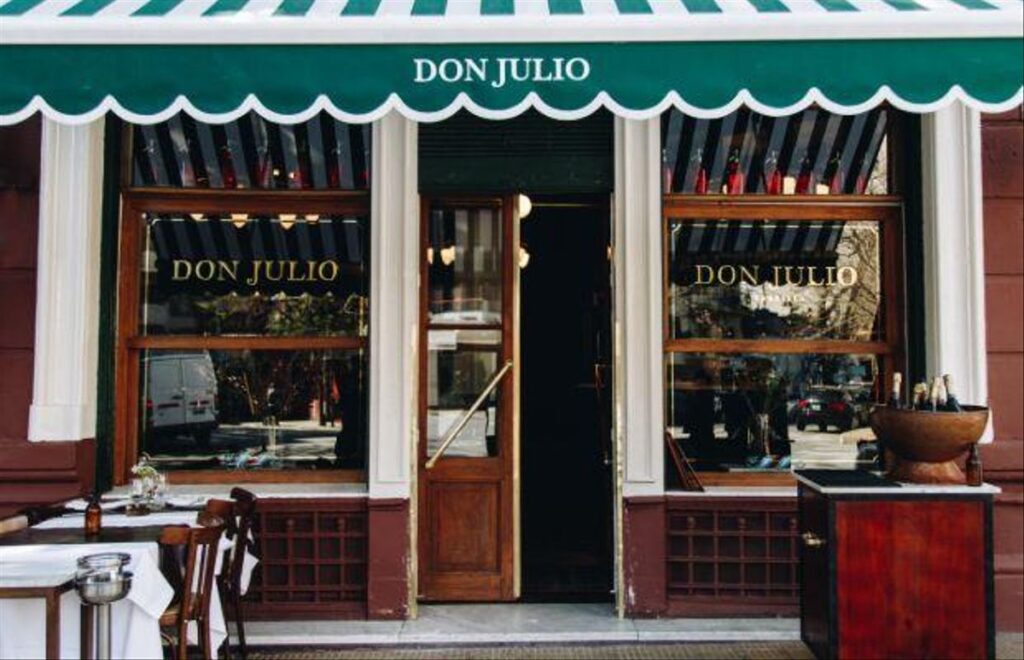
Don Julio needs little introduction: one Michelin star, consistently ranked among the best restaurants in Latin America, and still the parrilla by which others are measured. La Cabrera and Lo de Jesús are reliable classics for those who want the full Argentine grill experience.

Cucina Paradiso and Raggio Osteria do Italian with care; Picsa does pizza with good sourcing. El Preferido de Palermo — a bodegón in a rose-pink corner building, open since 1952 and recently restored — is one of those places that manages to feel both historic and alive.
And if you’re in the mood for something further from the Argentine canon, Niño Gordo (Asian food) and Gran Dabbang (Indian-inspired, small, brilliant) are two of the most original restaurants in the neighbourhood.
Getting to Palermo Soho from Palo Santo
Palo Santo sits in Palermo Hollywood, the next neighbourhood over — a ten-minute walk. Which means Palermo Soho is genuinely on your doorstep: close enough for a morning bookshop visit, an afternoon ice cream, and a long dinner, all without a taxi. If you want a more personal recommendation based on what you’re looking for, just ask at the front desk.