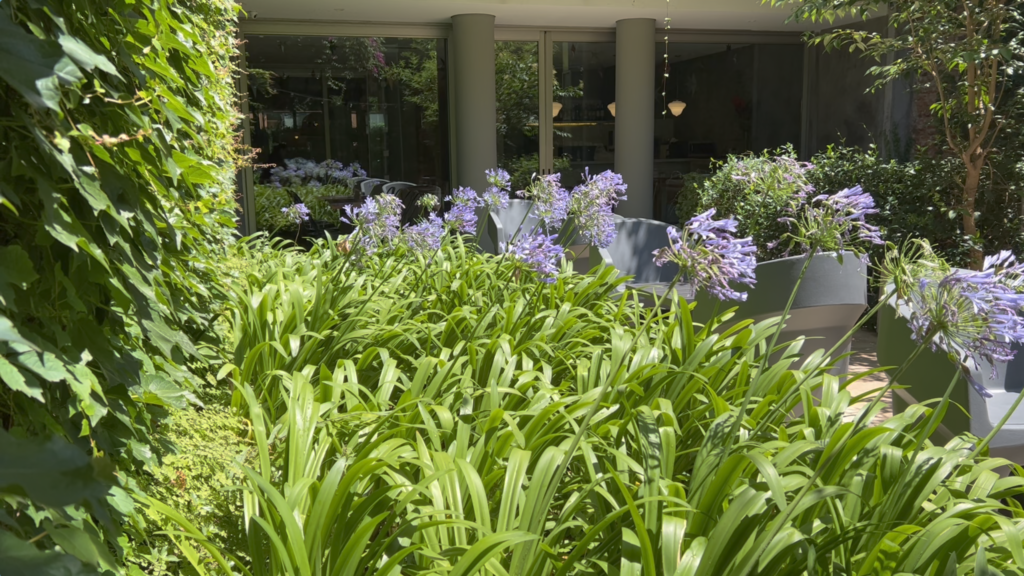
At Palo Santo Hotel, we are proud to be the first urban green hotel in Argentina. Our environmental commitment visually translates into unique green architecture. Over 900 plants cover our façades, balconies, roof, and patios, creating a one-of-a-kind vegetal structure that transforms our building into a living, breathing ecosystem. But why exactly does this abundance of plants contribute to our green program?
Vertical Gardens Regulate Indoor Temperatures
Plants help regulate temperatures inside the building, thus allowing us to reduce energy consumption for heating and air conditioning significantly.
The increased humidity brought by vegetation noticeably cools the walls during summer months. The gardens also provide natural shade, creating multiple layers of thermal protection. Both effects considerably reduce indoor temperatures during the warmest periods. In Buenos Aires, where summer temperatures often exceed 90°F (32°C), this directly translates into substantial energy savings and improved comfort for our guests.
During winter, plants also provide natural insulation. They protect the building from strong winds and create a more pleasant microclimate around the structure. This natural barrier effect helps maintain more stable indoor temperatures year-round, reducing our reliance on artificial heating and cooling systems.

Plants Absorb Carbon Dioxide Emissions
When plants grow, they absorb significant volumes of carbon dioxide through photosynthesis, actively contributing to air quality improvement. Estimates show that a small to medium-sized plant like those growing on our walls captures approximately 3 kilograms of CO₂ per year. With over 900 plants covering Palo Santo Hotel, this translates into 2.5 tons of carbon dioxide absorption annually – equivalent to the emissions produced by a car driving approximately 6,000 miles.
This carbon sequestration not only helps offset our hotel’s environmental footprint but also contributes to cleaner air in our urban neighborhood, creating a positive impact that extends beyond our property boundaries.
Vegetation and Rainwater Regulation
In large cities such as Buenos Aires, most surfaces are covered with asphalt or concrete constructions. There are few natural means of water absorption, so rainwater flows directly into the city’s storm sewer system. Buenos Aires experiences sporadic yet very intense rain showers that regularly overwhelm the storm drainage infrastructure, resulting in temporary floods and transportation difficulties throughout the city.
Plants naturally delay rainwater release to the sewer system. Rainwater is absorbed by soil and plant roots, and only the surplus is gradually released over time. This natural water retention helps reduce peak flow during heavy rainfall events. In addition to our extensive plant coverage, we also utilize a specialized water collection tank that serves the same stormwater management purpose, creating a comprehensive water management system.
Our green infrastructure approach demonstrates how hotels can play an active role in addressing urban environmental challenges while enhancing the guest experience through sustainable design.
Are you interested in learning more about our sustainable program? We would be delighted to answer any of your questions – simply fill out our contact form, and our sustainability team will respond promptly.